Yemeni forces attack Saudi Aramco oil facility
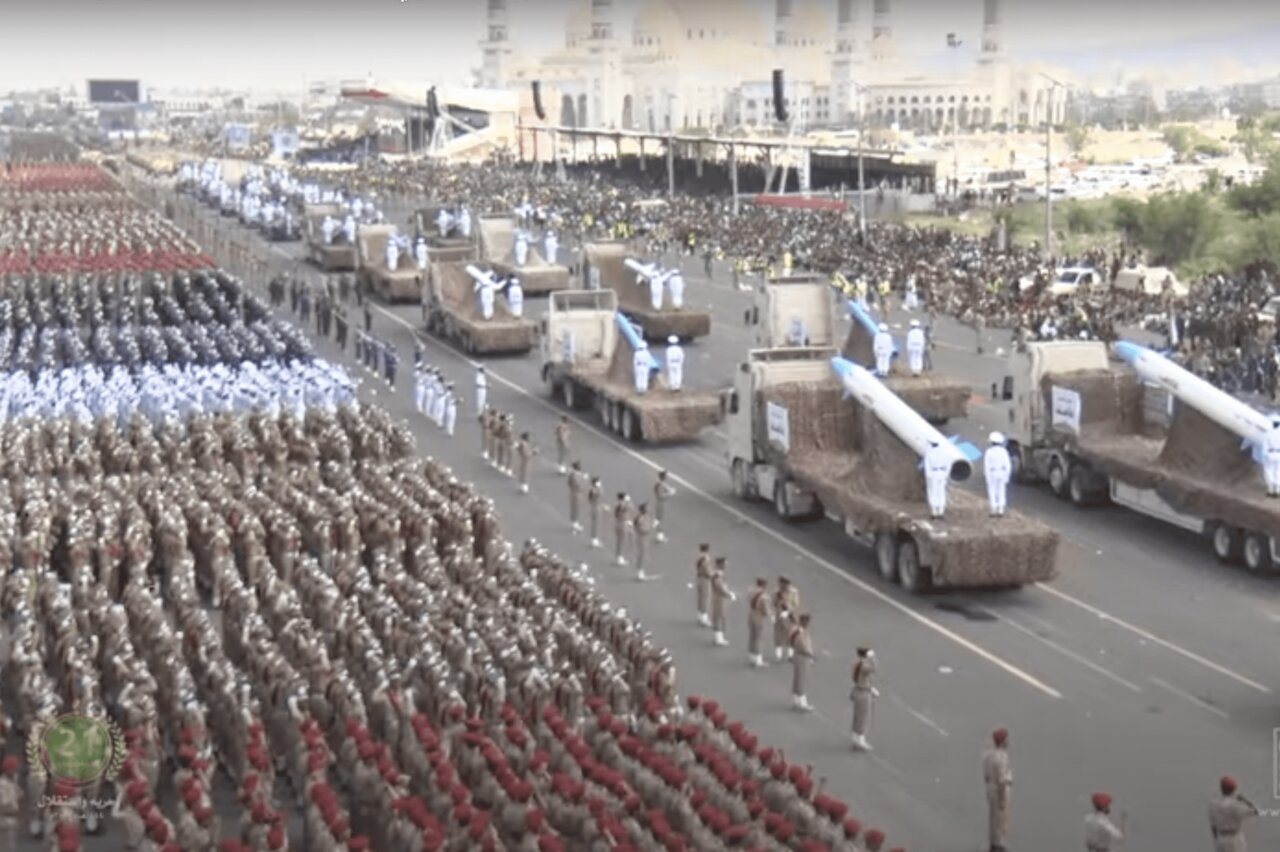
TEHRAN – The Yemeni Armed Forces have announced that they targeted a Saudi oil refinery in response to the violation of Yemeni airspace.
Brigadier General Yahya Saree, spokesman for the Yemeni military, said: “Thanks to God, the Yemeni Armed Forces succeeded in targeting the Aramco refinery in Jizan with a drone, and the strike was accurate.”
Saree explained that the attack came “in response to the Saudi enemy violating the airspace of the provinces of Saada and Hajjah with its drones.”
Earlier, the Saudi Ministry of Energy announced that the industrial security firefighting teams of Saudi Aramco had extinguished a fire that broke out in the early hours of Sunday at one of the company’s refinery facilities in Jizan, with no injuries reported.
In a separate statement, the Yemeni Armed Forces (YAF) announced, “In response to the continued Saudi enemy mobilization of its forces and its reinforcement with weapons and equipment … the Yemeni Armed Forces carried out a large-scale and qualitative military operation targeting Saudi enemy mobilizations and weapons depots in the Al-Mokha area.”
The statement underlined, “The strikes were precise and resulted in widespread destruction of the equipment and weapons, with dozens killed and wounded, including Saudis.” It added, “The operation was carried out using a large number of ballistic missiles and UAVs.”
Last month, the YAF announced the collapse of the 2022 truce with Saudi Arabia and imposed a naval blockade on Riyadh, following a broad popular mandate expressed by Yemenis during the massive Friday demonstrations in the capital Sanaa and several provinces.
These developments came after Saudi Arabia targeted Sanaa International Airport in an attempt to prevent an Iranian aircraft from landing. The plane was carrying the Yemeni delegation that had taken part in the funeral of the martyred Leader of Iran’s Islamic revolution, Ayatollah Sayyed Ali Khamenei, as well as Yemeni patients, wounded people, and those stranded abroad.
As a result of the aggression, the aircraft instead landed at Hodeidah Airport, prompting a response from the YAF, which targeted Abha Airport in Saudi Arabia.
Following this, the YAF targeted numerous oil tankers that violated Yemen’s maritime ban and forced others to change course, in addition to targeting Aramco oil facilities in Saudi Arabia in response to attacks on Yemen and its sovereignty.
In parallel, the YAF engaged in fierce clashes with Saudi-backed forces in Yemen, resulting in the deaths of dozens of them.
A Yemeni source told regional media that the government in Sanaa is imposing a new equation inside Yemeni territory, one that “will become firmly established on a daily basis.”
The source revealed that the new equation is that “any military presence or movement by Saudi forces toward Yemen, or in the opposite direction, will be directly targeted.”
The source also pointed out that Yemen’s objective behind this equation is to settle the battle on the ground, cut off the forces affiliated with Saudi Arabia, and prevent them from moving between the provinces.
Two days earlier, the YAF announced that they had carried out a large-scale and qualitative military operation targeting mobilizations belonging to the “Saudi enemy” in the Yemeni areas of Al-Ruwaik, Al-Abr, and Al-Thaniyah, as well as other camps belonging to the First and Third Emergency Divisions, resulting in the killing and wounding of hundreds of militants.
Yahya Saree said the operation was carried out using a large number of ballistic missiles and drones, after the YAF detected major Saudi military mobilizations that were in their final stages and “aimed at escalating against the free Yemeni provinces and forcing them to abandon their position on ending the blockade.”
This comes as the Yemeni ban on Saudi maritime shipping in the Red Sea is entering its third week, after the leader of Yemen’s revolution, Sayyed Abdul-Malik al-Houthi, announced late last month that the equation of “blockade for blockade” would be established.
It appears that this equation will continue, and may even escalate, as long as Saudi Arabia persists in its blockade of Yemen and refuses to implement the humanitarian obligations set out in the roadmap, which Riyadh agreed to under Omani mediation in 2023.
Developments on the ground confirm the Sanaa government’s success in preventing Saudi oil tankers and commercial vessels from passing through the area of operations in the Red Sea, Bab al-Mandab, and the Gulf of Aden.
This restriction carries serious consequences that drain the Saudi economy and force Saudi maritime shipping to take lengthy and costly alternative routes, amid a decline in Riyadh’s oil exports and commercial imports, as well as shipping companies’ compliance with the restrictions.
This has resulted in a significant rise in shipping and insurance costs, meaning that a single voyage could take between 30 and 60 days, with a tangible impact on supply chains.
The Sanaa government's “blockade for blockade” equation appears to have been achieved through two courses of action:
Targeting Saudi vessels or vessels linked to Saudi Arabia if they violate the Yemeni ban, using appropriate missiles and drones, as occurred late last month with four oil tankers, according to statements by the YAF.
The blockade has forced oil tankers and commercial cargo vessels to alter their routes, traveling to and from their destinations around South Africa’s Cape of Good Hope. The YAF has succeeded in changing the routes of more than 16 vessels, according to specialized maritime sources.
“Forcing Saudi oil vessels to change course comes within the framework of establishing the blockade-for-blockade equation and as a result of tightening the maritime ban on vessels belonging to the Saudi enemy,” the YAF stressed.
Meanwhile, international maritime-tracking websites indicate that Bab al-Mandab witnessed the highest proportion of non-Saudi vessels passing through it over the past two weeks. This confirms the Yemeni account and undermines Saudi claims portraying Yemen as a threat to international shipping.
Sanaa is seeking to establish parity and direct military deterrence with Saudi Arabia. This is not just a display of force or an effort to serve a particular agenda, as some media propagate. Rather, it is an expression of popular will rooted in a deep sense of injustice and the continued grievances inflicted by Saudi Arabia for 12 years.
Leave a Comment